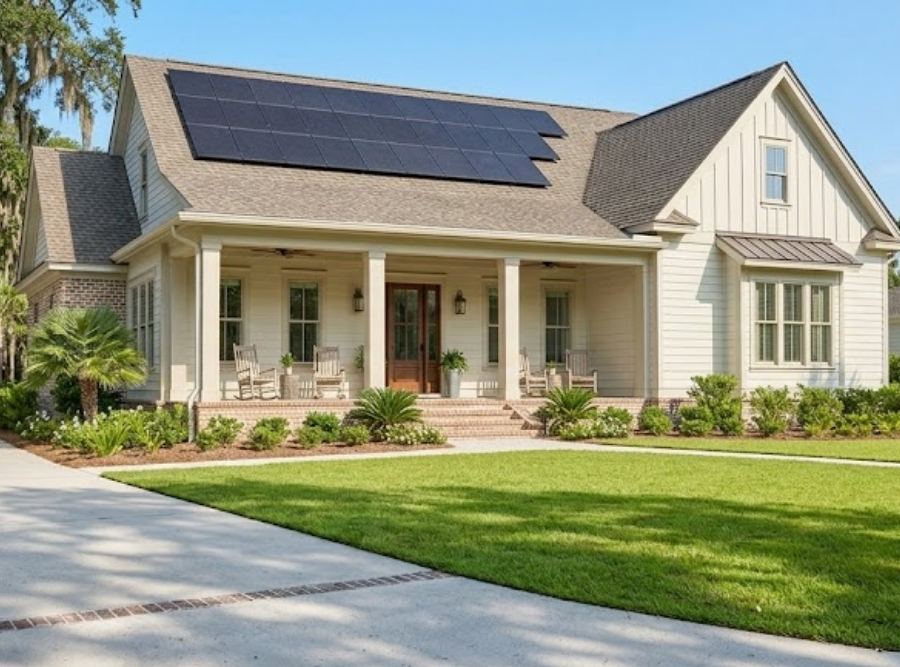
Modern Lowcountry home in Hardeeville, South Carolina featuring newly installed roof solar panels.

Can I Put Solar Panels on My Roof in a Hardeeville, SC Neighborhood?

Quick Answer:
Yes, in most cases you can install solar panels on your roof in Hardeeville, SC, but you may need to meet HOA requirements, local building codes, and ensure your roof is in good condition before installation. If your roof is nearing the end of its lifespan, replacing it first is often the smarter long-term investment because removing and reinstalling solar panels later can add significant cost.

Many homeowners in Hardeeville are taking a closer look at solar energy as electric costs continue to rise and more neighborhoods embrace energy-efficient homes. Communities such as Riverton Pointe, Hilton Head Lakes, Hearthstone Lakes, Hampton Pointe, and newer developments along Argent Boulevard have seen growing interest in residential solar systems, but one of the first questions people ask has very little to do with electricity. Instead, they want to know whether they are even allowed to install solar panels on their home and whether their existing roof is suitable for supporting the system.

The answer is usually more complicated than a simple yes or no. Installing solar panels isn’t just about mounting equipment on shingles. It requires evaluating the condition of the roofing system, understanding neighborhood architectural requirements, ensuring the roof has enough remaining service life, and planning for South Carolina’s demanding weather conditions. At Apex Roofing of the Lowcountry, we’ve seen homeowners become excited about a solar project only to discover that an aging roof, previous storm damage, or deferred maintenance could create expensive problems if not addressed first. Taking the time to evaluate the roof before signing a solar contract often saves thousands of dollars and prevents unnecessary headaches later.

Why Your Roof Matters Just as Much as the Solar Panels

Many people naturally focus on choosing the right solar company, comparing panel efficiency, or estimating future energy savings. Those are important decisions, but the roof underneath the panels deserves just as much attention. Solar systems are designed to remain in place for decades, and if the roof reaches the end of its service life halfway through that period, the panels must usually be removed before the roof can be replaced and then reinstalled afterward. That additional labor can become a significant expense that many homeowners never anticipated.

This situation is surprisingly common throughout Hardeeville and the surrounding Lowcountry. A homeowner may have a roof that’s 18 or 20 years old, still looks acceptable from the ground, and has never leaked. The solar installer sees enough usable surface area and moves forward with the project. Two or three years later, however, the roof begins showing widespread granule loss, curling shingles, or recurring leaks after tropical storms. The homeowner is now facing not only the cost of replacing the roof but also the additional expense of removing and reinstalling the solar array.

A quality roofing inspection helps prevent that situation. Rather than simply asking whether the roof can physically hold solar panels today, the more important question is whether the roof is likely to remain dependable for the entire expected lifespan of the solar system. If the answer is no, replacing the roof first usually represents the wiser financial decision, even though it increases the initial project cost.

Another factor that deserves attention is warranty protection. Homeowners sometimes assume that installing solar panels has no impact on their roofing warranty, but that is not always the case. Improper roof penetrations, incorrect flashing techniques, or unapproved installation methods can create disputes between roofing manufacturers and solar contractors if leaks develop later. Coordinating roofing and solar work properly from the beginning greatly reduces those risks.

Is Your Existing Roof Ready for Solar?

Not every roof is automatically a good candidate for solar installation, even if the home itself receives excellent sunlight. A thorough roof evaluation should examine much more than the shingles that are visible from the driveway. Roofing professionals also assess the condition of the decking, flashing, pipe boots, roof penetrations, ventilation system, structural framing, and overall remaining service life before recommending that solar equipment be mounted.

Roof age is often the first consideration. In general, a roof that’s less than ten years old and in good condition can usually move forward without major concerns, assuming it was installed correctly and has not suffered significant storm damage. Roofs that fall between fifteen and twenty years old deserve a much closer evaluation because they may still be functioning well while approaching the point where replacement becomes economically sensible. A roof older than twenty years is not automatically disqualified, but homeowners should understand that the likelihood of replacing it during the life of the solar system increases considerably.

Visible signs of deterioration also deserve careful attention before any solar equipment is installed. Curled or missing shingles, granule loss, recurring repairs, deteriorated flashing, soft decking, previous leaks, or sagging roof sections all indicate that the roofing system should be evaluated thoroughly before additional equipment is added. Solar panels should never be used to cover existing roofing problems because those issues generally continue to worsen beneath the array while becoming more difficult and expensive to access.

Homes throughout Hardeeville experience conditions that place additional stress on roofing systems compared to many inland communities. High humidity, strong ultraviolet exposure, frequent thunderstorms, hurricane-season winds, and occasional salt-laden air moving inland from the coast all contribute to the gradual aging of shingles, flashing, and sealants. Even neighborhoods farther from the coastline, such as those around Whyte Hardee Boulevard, Highway 46, or Interstate 95, still experience the demanding climate that defines the South Carolina Lowcountry.

Will Your HOA Allow Solar Panels?

One of the biggest concerns homeowners have has nothing to do with the roof itself. Instead, they wonder whether their homeowners association will allow solar panels in the first place. This question comes up frequently in planned communities throughout Hardeeville, particularly in neighborhoods with architectural review committees that oversee exterior modifications.

The good news is that many HOAs do allow residential solar installations, but they often require homeowners to follow an approval process before work begins. That process may include submitting site plans, panel layouts, equipment specifications, roof elevations, or architectural review forms demonstrating how the system will appear once installed. Some communities establish guidelines regarding where panels may be located, how visible they are from the street, or how conduit should be routed to preserve the neighborhood’s appearance.

A common misconception is that every HOA either completely prohibits solar panels or automatically approves every installation. In reality, most communities fall somewhere in between. Their goal is typically to balance homeowners’ interest in renewable energy with maintaining consistent neighborhood aesthetics. That’s why homeowners should review their governing documents and speak with the HOA before signing installation contracts rather than assuming approval will happen automatically.

Another reason to start early is timing. HOA architectural review meetings may occur only once or twice each month, and additional documentation requests can extend the overall project schedule. Addressing those requirements before materials are ordered helps avoid unnecessary delays once the roofing and solar work is ready to begin.

Solar Panels Don’t Damage a Roof—Poor Installation Does

One of the most persistent myths surrounding residential solar is that the panels themselves damage the roof. In reality, properly installed solar panels should not shorten the life of a healthy roofing system. The concern isn’t the panels; it’s how they are attached. Every solar array requires mounting hardware that penetrates the roofing system, and those attachment points must be integrated correctly with the shingles, flashing, underlayment, and roof structure to prevent future leaks.

Professional solar installers use engineered mounting systems designed for specific roofing materials, whether the home has architectural asphalt shingles, standing seam metal roofing, or another approved roofing system. Each attachment point should be securely fastened into the structural framing below the roof decking and protected with properly installed flashing that sheds water naturally. When this work is completed correctly, the roof maintains its weather resistance while supporting the additional weight of the solar array.

Problems usually develop when shortcuts are taken. We’ve seen situations where older flashing was left in place, deteriorated shingles were ignored, sealants were relied upon instead of proper flashing techniques, or mounting hardware was installed into weakened roof decking. Those issues often remain hidden until the first heavy rain or tropical storm reveals water intrusion around the penetrations. At that point, determining responsibility between the roofing contractor and solar installer can become far more complicated than simply preventing the problem in the first place.

Another misconception is that solar panels somehow strengthen or protect the roof beneath them. While panels may shield portions of the shingles from direct sunlight, they do not stop the roof from aging. Flashing, underlayment, sealants, and the uncovered portions of the roof continue to experience the same expansion, contraction, humidity, and weather exposure as before. An older roof will continue moving toward the end of its service life whether solar panels are installed or not.

Coastal Weather Makes Roof Quality Even More Important

Installing solar panels in Hardeeville requires planning for more than everyday weather. The South Carolina Lowcountry experiences long, humid summers, frequent thunderstorms, hurricane-season winds, and periods of wind-driven rain that place exceptional demands on both roofing systems and solar mounting hardware. A roof that performs adequately in a milder climate may face very different challenges here.

Homes throughout Hilton Head Lakes, Riverton Pointe, University Park, Hampton Pointe, and neighborhoods along Argent Boulevard experience repeated cycles of intense summer heat followed by heavy afternoon storms. Those daily temperature swings cause roofing materials to expand and contract while humidity slows drying after rainfall. Over many years, flashing, sealants, pipe boots, and shingles gradually deteriorate under those conditions. If solar equipment is installed on a roof already showing signs of aging, existing weaknesses may become more difficult to repair once the panels are in place.

Wind resistance is another major consideration. South Carolina’s coastal building requirements recognize the possibility of tropical storms and hurricanes, and both the roof and solar mounting system must perform together during severe weather. The strength of the installation depends not only on the solar equipment but also on the condition of the roof framing, decking, fasteners, and attachment points supporting it. If portions of the roofing system have been weakened by previous leaks or deteriorated decking, those issues should be addressed before additional equipment is installed.

Tree coverage also deserves careful evaluation. Hardeeville neighborhoods often feature mature live oaks and pines that provide welcome shade during the summer but may significantly reduce solar production depending on the roof’s orientation. While selective tree trimming may improve sunlight exposure, homeowners should weigh the energy benefits against preserving the character and natural cooling those trees provide.

Why a Roofing Inspection Should Come Before the Solar Contract

One of the biggest mistakes homeowners make is allowing the solar project to move forward before fully understanding the condition of the roof. Many solar companies perform only a limited visual assessment because their primary responsibility is designing and installing the energy system, not evaluating the long-term health of the roofing structure beneath it. That makes an independent roofing inspection one of the most valuable steps in the entire planning process.

At Apex Roofing of the Lowcountry, our goal is to determine whether the roof is truly prepared to support decades of additional service. Ralph or Pierce personally gets on the roof before making recommendations because evaluating a roof from the ground cannot reveal many of the conditions that influence solar readiness. During our inspection, we assess the shingles, flashing, pipe boots, roof penetrations, valleys, ventilation, visible decking condition, previous repairs, storm damage, and overall remaining service life of the roofing system.

Sometimes the inspection confirms that the roof is in excellent condition and ready for solar installation. Other times we recommend relatively minor repairs that should be completed beforehand to maximize the life of the roofing system. In some cases, however, replacing the roof before installing solar is simply the more practical financial decision. Although homeowners may initially hesitate at the additional investment, replacing the roof first often avoids paying to remove and reinstall the solar system several years later.

When replacement is appropriate, our process reflects the same attention to detail that defines every roofing project we complete. We personally inspect the roof before preparing an estimate, provide an itemized written proposal before materials are ordered, obtain the required permits, document the project with photographs, perform a magnetic sweep after tear-off, register the applicable manufacturer warranty upon completion, and conduct a final walkthrough with the homeowner before considering the job finished. As a CertainTeed ShingleMaster-certified contractor holding South Carolina License #57706 and Town of Bluffton License #0620033323, we believe careful planning is just as important as quality installation.

Solar and Roofing Work Best When Planned Together

For homeowners planning to stay in their home for many years, solar can be an excellent long-term investment, especially when paired with a healthy roofing system that has decades of service life remaining. The key is making sure both investments work together instead of creating unnecessary expenses down the road. Installing solar on a roof nearing replacement often saves money today but creates avoidable costs later when the panels must be removed to complete roofing work that could have been planned from the beginning.

The best approach is to evaluate the roof first, understand its remaining lifespan, review any HOA architectural requirements, and coordinate the roofing and solar professionals before work begins. That planning process provides a much clearer picture of the overall project and helps homeowners make confident decisions based on the condition of the home rather than assumptions.