
Can I Replace My Roof Myself in Beaufort’s Historic District?
Quick Answer:
You may be able to replace the roof on your own home in some situations, but replacing a roof in Beaufort’s Historic District is rarely as simple as installing new shingles. Historic review requirements, permits, aging construction, hidden structural conditions, and the demands of the Lowcountry climate make it important to understand the full scope of the project before beginning any work.
Standing on a quiet street in Beaufort’s Historic District, replacing a roof can appear surprisingly straightforward. From the sidewalk, it looks like a matter of removing worn shingles, installing new materials, and enjoying years of protection from the weather. That perception changes quickly once the first section of roofing comes off. Historic homes often reveal decades of repairs, additions built in different eras, aging framing, deteriorated flashing, and construction methods that bear little resemblance to modern houses.
That’s why the question isn’t simply whether you can replace your own roof. The better question is whether you fully understand the house you’re working on. A historic roof isn’t just another home improvement project. It’s part of a building that has survived generations of hurricanes, coastal humidity, changing building practices, and countless repairs. Replacing it successfully requires protecting both the structure itself and the architectural character that makes Beaufort’s historic neighborhoods so distinctive.
Historic Roofs Tell the Story of the House Beneath Them
One of the most fascinating things about working on older homes is that every roof tells a story. Unlike newer construction, historic homes have often experienced multiple reroofing projects over many decades. One owner may have replaced cedar shingles with asphalt. Another may have added an addition years later using different framing methods. Flashing details may have been repaired several times using materials and techniques that reflected the standards of their day.
Most homeowners don’t realize they’re often uncovering the work of several generations rather than simply removing one old roof. Once demolition begins, it’s common to find evidence of previous renovations, patched valleys, replaced decking sections, outdated flashing details, or framing modifications that were impossible to identify from the ground. Every layer offers clues about how the home has changed over time.
That history matters because every previous repair influences today’s project. A roofing system performs as one complete assembly, and inconsistencies created decades ago often become the weak points where modern leaks eventually develop. Understanding those transitions is one of the biggest differences between replacing the roof on a historic Beaufort home and replacing the roof on a newer subdivision house.
Most Homeowners Think They’re Replacing Shingles—They’re Actually Replacing an Entire Roofing System
One of the biggest misconceptions about roof replacement is believing the project revolves around shingles. Shingles are certainly the most visible part of the roof, but they represent only one component of a much larger weather protection system.
Beneath the finished roofing material are underlayment, roof decking, flashing, drip edge, valleys, ridge details, ventilation components, fasteners, pipe boots, and structural framing that all work together to keep water out of the home. When one of those components begins to fail, the effects often appear somewhere entirely different from the original problem. A ceiling stain rarely develops directly beneath the source of the leak, and replacing visible shingles alone may do little to solve the underlying issue.
Historic homes make this even more important because many of these components have already experienced decades of weather exposure. Flashing around chimneys may have been repaired several times. Underlayment may have reached the end of its useful life long before the shingles. Decking may have weakened gradually from years of unnoticed moisture intrusion. Installing beautiful new roofing materials over aging structural components rarely produces the long-term performance homeowners expect.
The goal of a roof replacement isn’t simply to improve appearance. It’s to restore the integrity of the entire roofing system so every component works together to protect the home against Beaufort’s challenging coastal environment.
Historic Homes Rarely Look the Same Once the Roof Is Open
Perhaps the biggest surprise homeowners encounter during historic roof replacement is how much changes once demolition begins.
Most homeowners don’t realize the real inspection often starts after the existing roofing material has been removed. What looked like a straightforward replacement from the driveway may reveal deteriorated decking hidden beneath previous repairs, multiple layers of older roofing materials, moisture damage around chimneys, or flashing that has quietly reached the end of its useful life after decades of service.
We’ve also found that historic homes frequently contain additions completed years apart from the original structure. Those additions may have different roof framing, decking thicknesses, ventilation methods, or flashing details that require careful integration into the new roofing system. Rather than working on one uniform roof, you’re often working across several generations of construction that need to perform as one weather-resistant assembly once the project is complete.
This is one reason experienced roofing contractors avoid making assumptions before thoroughly evaluating the roof. Historic homes reward careful investigation because they often conceal conditions that simply cannot be identified until the roof is opened.
Beaufort’s Coastal Climate Leaves Very Little Room for Installation Mistakes
Replacing any roof requires careful workmanship, but Beaufort’s coastal environment makes proper installation even more important.
Long, humid summers keep roofing materials damp for extended periods after rain, while salt carried inland from nearby waterways gradually accelerates corrosion of exposed flashing, fasteners, and metal roof components. Strong ultraviolet exposure slowly reduces the flexibility of roofing materials, and tropical storms regularly test every flashing transition, fastener pattern, and roof penetration with wind-driven rain. Those environmental conditions don’t create problems overnight—they steadily expose weaknesses that already exist within the roofing system.
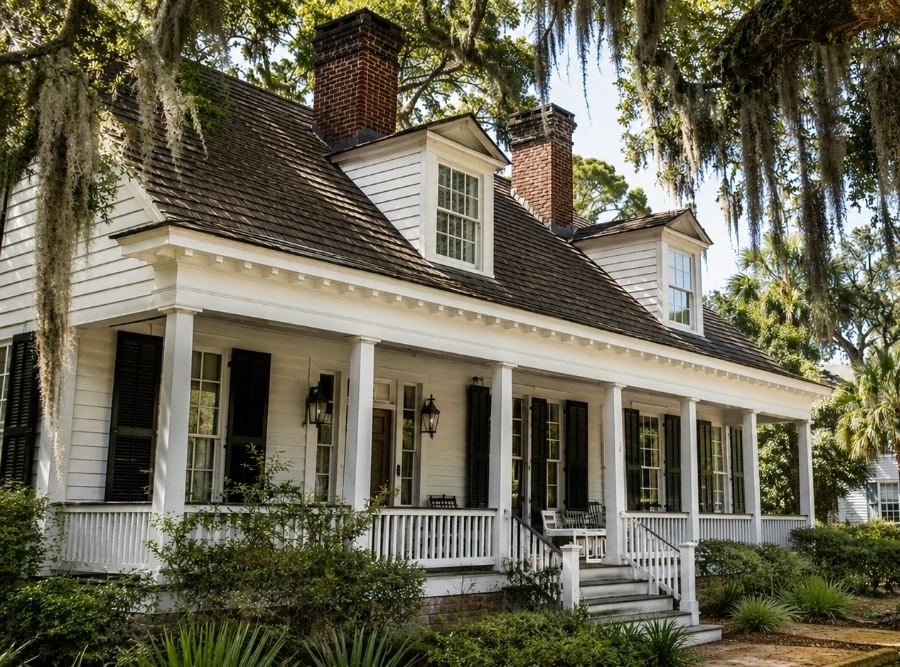
Historic homes face additional challenges because they often include complex rooflines, chimneys, dormers, porch roofs, decorative cornices, and architectural details that require significantly more flashing than a typical modern home. Every transition represents another opportunity for water intrusion if installation details aren’t executed correctly.
Homes throughout Beaufort’s Historic District, The Point, Pigeon Point, Downtown Beaufort, and portions of Port Royal frequently feature mature live oaks that provide wonderful shade while also dropping leaves, moss, and small branches onto roofing surfaces. Organic debris can trap moisture after storms, making regular maintenance particularly important. Homes closer to the Beaufort River and surrounding tidal waterways may also experience greater exposure to salt-laden air than properties located farther inland, increasing the importance of corrosion-resistant roofing components and routine inspections.
The Biggest DIY Mistake Usually Happens Before the First Shingle Comes Off
Many homeowners believe the greatest challenge of replacing a roof is learning how to install roofing materials correctly. In reality, the biggest mistake often happens much earlier—during project planning.
A homeowner may budget for shingles and underlayment without realizing the roof decking needs significant repairs. They may assume existing flashing can be reused, only to discover it has deteriorated beyond practical repair. They may purchase materials before confirming whether the home’s location or historic status requires additional review or approvals. They may also underestimate how quickly an unfinished roof can become vulnerable if severe weather moves through before the project is completely dried in.
Historic homes magnify those risks because every unexpected discovery can affect scheduling, material selection, structural repairs, or the overall scope of work. What begins as an effort to save money sometimes becomes considerably more expensive after hidden deterioration, weather delays, or corrective work enters the picture.
Careful planning rarely eliminates surprises, but it does reduce the likelihood that small surprises become major setbacks.
Online Tutorials Can Teach Roofing Techniques—They Can’t Teach the History of Your House
The internet has made home improvement information more accessible than ever, and there are many excellent educational resources available for homeowners. However, most roofing tutorials are filmed on relatively modern homes with predictable framing, clean roof decking, straightforward rooflines, and construction methods that follow current building practices.
Historic Beaufort homes are often very different.
Online videos cannot anticipate hidden framing modifications made decades ago, multiple generations of flashing repairs, irregular roof geometry, original wood components, or preservation considerations unique to historic properties. They also can’t evaluate whether your roof has experienced years of moisture intrusion beneath areas that still appear solid from above.
That’s why online education should be viewed as background knowledge rather than a substitute for evaluating the specific home you’re working on. Every historic house has its own history, and that history often influences the roofing project far more than generalized installation advice.
Historic Preservation Isn’t About Making Roofing More Difficult
Some homeowners worry that preservation requirements exist simply to make projects more complicated. In reality, historic preservation serves a much broader purpose.
Beaufort’s Historic District is recognized because of the collective architectural character created by its homes, churches, public buildings, streetscapes, and historic details. Roofing materials, profiles, colors, and architectural features all contribute to that appearance. Maintaining those characteristics helps preserve not only individual buildings but also the historic identity of the community as a whole.
If your home is located within a historic area, it’s important to verify current review requirements, approval processes, permit obligations, and acceptable roofing materials with the appropriate City of Beaufort offices before beginning work. Requirements can vary depending on the property’s location, the scope of the project, and current local regulations, so confirming those details before purchasing materials or removing the existing roof can help prevent unnecessary delays.
Understanding those requirements early allows homeowners to make informed decisions while avoiding interruptions once construction has already begun.
A Professional Inspection Answers Questions the Roof Won’t Reveal From the Ground
One of the greatest benefits of a professional inspection is understanding the project before committing to it.
At Apex Roofing, Ralph or Pierce personally inspect every roof because historic homes deserve more than an estimate based on what can be seen from the driveway. We evaluate shingles, flashing, roof decking, ventilation, structural transitions, valleys, chimneys, penetrations, and other components that influence both the roof’s remaining service life and the complexity of the replacement. Just as importantly, we explain what we find so homeowners understand why repairs, rehabilitation, or replacement may be recommended.
If replacement is the appropriate solution, our process reflects the same attention to detail. We provide itemized written estimates before work begins, obtain permits when required, document every stage of the project with photographs, perform a magnetic sweep after installation to remove stray fasteners, register manufacturer warranties upon completion, and finish with a final walkthrough because we believe homeowners should understand exactly what was completed on their home.
Our goal isn’t simply to install a new roof. It’s to help homeowners make informed decisions that respect both the history of their property and the realities of living on the South Carolina coast.
Historic Homes Deserve More Than a Standard Roofing Project
Replacing the roof on a historic Beaufort home isn’t just another renovation. It’s an opportunity to protect a building that has stood through generations of coastal weather while preserving the craftsmanship and architectural character that make it unique.
Whether you’re considering replacing the roof yourself because you enjoy tackling challenging projects or because you’re looking for ways to reduce costs, understanding the true scope of the work is one of the smartest investments you can make. Historic homes often reveal conditions that no online tutorial, material estimate, or ground-level inspection can predict, and those discoveries are much easier to manage with careful planning than after demolition has already begun.
If you own a historic home in Beaufort’s Historic District, The Point, Pigeon Point, Downtown Beaufort, Port Royal, Lady’s Island, Mossy Oaks, or anywhere throughout the Lowcountry, Apex Roofing is here to provide an honest assessment of your roof’s condition. We’ll help you understand what your roof is telling us, explain your options clearly, and guide you toward the solution that best protects your home, its history, and its future.