
Average Lifespan of an Asphalt Shingle Roof in Coastal South Carolina Heat
Quick Answer:
An architectural asphalt shingle roof in coastal South Carolina typically lasts 20 to 30 years, but many roofs in areas like Hardeeville, Bluffton, Hilton Head Island, and Beaufort begin showing noticeable signs of aging between 15 and 20 years because of intense UV exposure, high humidity, salt-laden air, frequent thunderstorms, and hurricane-season winds. Actual lifespan depends on installation quality, attic ventilation, maintenance, storm history, and the overall condition of the roofing system—not simply the age of the shingles.
A roof that performs well in another part of the country may age much differently once it is exposed to years of South Carolina’s coastal climate. Homeowners are often surprised when they see neighboring houses replacing roofs that seem “too new” or when their own roof begins showing signs of wear years before they expected. The immediate assumption is usually that something went wrong with the shingles themselves, but in most cases, the roof is simply responding to one of the harshest roofing environments in the Southeast.
Living in Hardeeville means your roof works every day. It experiences long stretches of intense summer sunshine, high humidity that keeps roofing materials damp long after storms pass, heavy afternoon thunderstorms, tropical systems, hurricane-force winds, and salt carried inland from the Atlantic coast. None of these conditions necessarily destroy a roof overnight, but together they gradually reduce the lifespan of every roofing system. Understanding that process helps homeowners recognize when normal aging becomes a reason for concern instead of waiting until a leak finally appears inside the home.
One of the biggest mistakes homeowners make is judging roof condition by age alone. We’ve inspected roofs that were more than twenty years old and still had useful service life remaining because they had been installed correctly, ventilated properly, and maintained over the years. We’ve also seen roofs barely fifteen years old that required replacement because repeated storm damage, poor attic ventilation, or improper installation accelerated their deterioration. Knowing what truly affects roof longevity is far more valuable than simply memorizing a number.
Why Asphalt Roofs Age Faster Along the South Carolina Coast
Many roofing manufacturers publish estimated service lives under relatively normal environmental conditions. Those estimates provide a useful starting point, but they do not account for the unique combination of weather conditions experienced throughout the South Carolina Lowcountry. Coastal roofing systems rarely fail because of one dramatic event. Instead, they experience thousands of small stresses that accumulate over many years until the roofing materials gradually lose their ability to perform as designed.
Ultraviolet radiation is one of the largest contributors to long-term roof aging. Every day, the sun heats asphalt shingles to temperatures far higher than the surrounding air. During the hottest parts of summer, roof surfaces can become extremely hot, causing the asphalt within the shingles to slowly oxidize and lose flexibility over time. As the asphalt dries, shingles become increasingly brittle, making them more susceptible to cracking, breaking, or losing protective granules when exposed to wind or hail. Homeowners often describe this process by saying the roof looks “cooked,” “dry,” or “baked,” even though the underlying cause is years of gradual UV degradation rather than sudden heat damage.
Heat alone is only part of the story. Coastal humidity creates another challenge by slowing how quickly roofing materials dry after rain. Throughout Hardeeville, roofs regularly experience cycles of moisture followed by intense heat, sometimes within the same afternoon. This repeated expansion and contraction gradually weakens sealant strips, flashing sealants, and other roofing components while encouraging algae growth on shaded roof slopes. Although algae staining is often cosmetic, prolonged moisture combined with heat contributes to the overall aging process that every coastal roof experiences.
Salt carried inland from the Atlantic also deserves attention. While Hardeeville is farther from the ocean than Hilton Head Island or parts of Beaufort, the coastal environment still affects exposed metal components throughout the roofing system. Flashing, fasteners, pipe boots, drip edges, and roof penetrations may all experience accelerated corrosion compared to similar roofs farther inland. Over many years, those seemingly minor components often become the first locations where leaks develop, even while the shingles themselves continue performing reasonably well.
What Is the Average Lifespan of an Asphalt Shingle Roof in Hardeeville?
The question homeowners ask most often is simple: “How long should my roof actually last?” While every property is different, architectural asphalt shingles installed on homes throughout Hardeeville generally provide about 20 to 30 years of service under normal conditions. However, because of the area’s demanding coastal climate, many roofs begin showing noticeable age-related wear somewhere between 15 and 20 years, particularly if they have experienced multiple tropical storms or years of inadequate ventilation.
That does not mean every roof reaching fifteen years old needs immediate replacement. Instead, this is often the period when homeowners begin noticing gradual changes that deserve professional attention. Granules may begin collecting in gutters after heavy rains. The roof may appear more faded than neighboring homes built around the same time. Small repairs become more frequent after wind events, and shingles may begin showing minor curling, cracking, or reduced flexibility. These are not necessarily signs of immediate failure, but they indicate the roofing system is entering a stage where regular inspections become increasingly valuable.
Between twenty and twenty-five years, many asphalt roofing systems transition from routine maintenance into long-term replacement planning. The protective mineral granules that shield the asphalt from ultraviolet radiation have often worn away in many areas, sealant strips may no longer bond as effectively during high winds, and years of thermal movement have weakened shingles throughout the roof. At this stage, even relatively minor storms can produce damage that would have had little effect on the same roof ten years earlier.
It is also important to remember that not all asphalt shingles perform equally. Higher-quality architectural shingles generally outlast older three-tab products because they are manufactured with greater thickness, improved construction, and better wind resistance. Likewise, roofs installed according to manufacturer specifications, combined with balanced attic ventilation and quality flashing installation, typically provide longer service lives than roofing systems where shortcuts were taken during construction. A properly installed roof is often just as important as the roofing material itself.
The Hidden Factors That Determine How Long Your Roof Lasts
When homeowners compare roofs throughout neighborhoods like Hilton Head Lakes, Riverton Pointe, Hearthstone Lakes, University Park, Hampton Pointe, or older areas near Downtown Hardeeville and Pine Arbor Road, they often wonder why homes built around the same time seem to age so differently. The answer usually lies beneath the shingles rather than on top of them.
Attic ventilation is one of the biggest influences on asphalt shingle longevity. A poorly ventilated attic traps excessive heat beneath the roof deck, increasing temperatures on both sides of the shingles during the hottest months of the year. That additional heat accelerates asphalt aging, weakens adhesive seal strips, and increases thermal expansion and contraction throughout the roofing system. Homeowners sometimes assume their roof is failing because of poor-quality shingles when the real culprit is inadequate airflow inside the attic. Proper intake and exhaust ventilation help regulate temperatures, reduce moisture accumulation, and create conditions that support longer roof performance.
Storm history is another factor that cannot be overlooked. Hardeeville experiences frequent thunderstorms throughout the warmer months, along with tropical systems and hurricanes capable of placing tremendous stress on roofing materials. Even if a storm does not create immediate leaks, repeated wind events gradually weaken aging shingles. Sealant strips lose adhesion, corners lift more easily, and individual shingles become increasingly vulnerable during each subsequent storm. This cumulative damage explains why many homeowners suddenly experience missing shingles after what seemed like a relatively minor wind event. The latest storm may not have been unusually severe—it simply exposed years of progressive weathering that had already reduced the roof’s ability to resist uplift.
Maintenance also plays a larger role than many homeowners realize. Small issues such as deteriorated pipe boots, loose flashing, clogged gutters, damaged ridge caps, or minor wind damage rarely remain isolated forever. Left unaddressed, they allow water to reach underlayment, roof decking, or structural components that are far more expensive to repair than the original problem. Routine inspections help identify these conditions while repairs remain relatively straightforward instead of allowing them to develop into widespread roofing failures.
Finally, installation quality continues influencing roof performance long after construction is complete. Proper fastening patterns, correctly installed flashing, manufacturer-approved underlayment, adequate ventilation, and careful attention to roof penetrations all contribute to how well a roof withstands years of coastal weather. Homeowners naturally focus on the shingles because they are visible, but many long-term roofing problems actually begin with hidden installation details that become apparent only after years of exposure to South Carolina’s demanding climate.
Signs Your Asphalt Roof Is Nearing the End of Its Service Life
One of the biggest misconceptions homeowners have is believing a roof will clearly announce when it needs replacement by developing a major leak. In reality, asphalt roofing systems often spend several years gradually declining before water ever enters the home. By the time ceiling stains appear or buckets become necessary during a storm, the roof has usually been showing warning signs for much longer. Learning to recognize those early indicators gives homeowners the opportunity to plan a replacement instead of reacting to an emergency.
Granule loss is one of the earliest and most common signs of an aging asphalt roof. Those small mineral granules are more than decorative—they shield the asphalt beneath from ultraviolet radiation. As they gradually wear away through years of sun exposure, heavy rain, and wind, the underlying asphalt becomes increasingly vulnerable to drying, oxidation, and brittleness. Finding a small amount of granules in the gutters after a new roof is installed can be normal, but large accumulations appearing year after year often indicate that the roof’s protective surface is steadily disappearing.
Curling, cracking, and brittle shingles usually follow as the asphalt loses flexibility. Homeowners often describe their roof as looking “dry,” “chalky,” or “cooked,” and while those are not technical roofing terms, they accurately reflect what the material is experiencing. Once shingles become brittle, they are less able to flex during temperature changes or high winds. Instead of remaining securely bonded together, they begin cracking, lifting, or breaking, making the roof increasingly vulnerable during the next tropical storm or hurricane.
Another warning sign many homeowners overlook is the increasing frequency of small repairs. Replacing a few shingles after an isolated wind event is not unusual, but if similar repairs become necessary every year, the roofing system may be reaching the point where continued maintenance is no longer the most economical solution. We’ve seen many roofs throughout Hardeeville where homeowners invested in repeated repairs over several years, only to discover that the cumulative cost would have covered a substantial portion of a complete roof replacement. At some point, repairing isolated symptoms no longer addresses the larger issue that the entire roofing system is approaching the end of its useful life.
Changes inside the home can also provide valuable clues. Water stains in the attic, damp insulation, higher attic temperatures, or small leaks during heavy rain often indicate that the roof’s protective layers are beginning to fail. These symptoms should never be ignored because once moisture reaches the roof decking, repairs frequently become more extensive than simply replacing shingles. Wet decking, deteriorated underlayment, mold growth, damaged insulation, and interior drywall repairs can quickly increase the overall cost of delaying replacement.
Should You Repair or Replace an Aging Asphalt Roof?
There is no universal age at which every asphalt roof should automatically be replaced. Some roofs continue performing well after two decades, while others reach the point where replacement becomes the wiser investment much sooner. The decision should always be based on the roof’s current condition, the extent of deterioration, the likelihood of future repairs, and how the home will be used over the coming years.
Repairs often make excellent financial sense when the roof has suffered isolated storm damage or when problems are limited to a few specific components. Replacing damaged flashing, repairing pipe boots, securing lifted shingles, or correcting localized wind damage can often extend the life of an otherwise healthy roofing system. In these situations, homeowners benefit from preserving the remaining life of the roof while avoiding the expense of premature replacement.
However, there comes a point where repairs begin addressing symptoms instead of solving the underlying problem. When widespread granule loss, extensive brittleness, recurring leaks, multiple repairs, deteriorated flashing, and aging underlayment all begin appearing together, replacing the entire roofing system frequently becomes the more economical long-term decision. Continuing to repair isolated areas may temporarily stop individual leaks, but it cannot reverse years of weathering that have affected the roof as a whole.
This decision becomes even more important in coastal South Carolina because of hurricane season. A roof already weakened by years of UV exposure and repeated storms is significantly more vulnerable when the next tropical system arrives. Homeowners often tell us they were planning to replace the roof “next year,” only to experience major wind damage before that opportunity arrived. Planning a replacement before severe weather becomes an emergency is almost always less stressful than coordinating one after widespread storm damage affects the entire region.
For homeowners planning to sell their property within the next few years, replacement may also deserve consideration if the roof is already nearing the end of its service life. Buyers, home inspectors, and insurance companies are paying closer attention to roof condition than ever before, particularly throughout the South Carolina Lowcountry. Understanding the roof’s actual condition before listing the home allows homeowners to make informed decisions instead of negotiating under pressure once the inspection report has already been delivered.
How Apex Roofing Evaluates the Remaining Life of Your Roof
At Apex Roofing of the Lowcountry, we believe homeowners deserve more than a quick opinion based on the age of the shingles. Two roofs installed in the same year can have dramatically different remaining service lives depending on installation quality, ventilation, maintenance history, storm exposure, and previous repairs. That is why every evaluation begins with a thorough inspection of the roofing system rather than assumptions based on a home’s construction date.
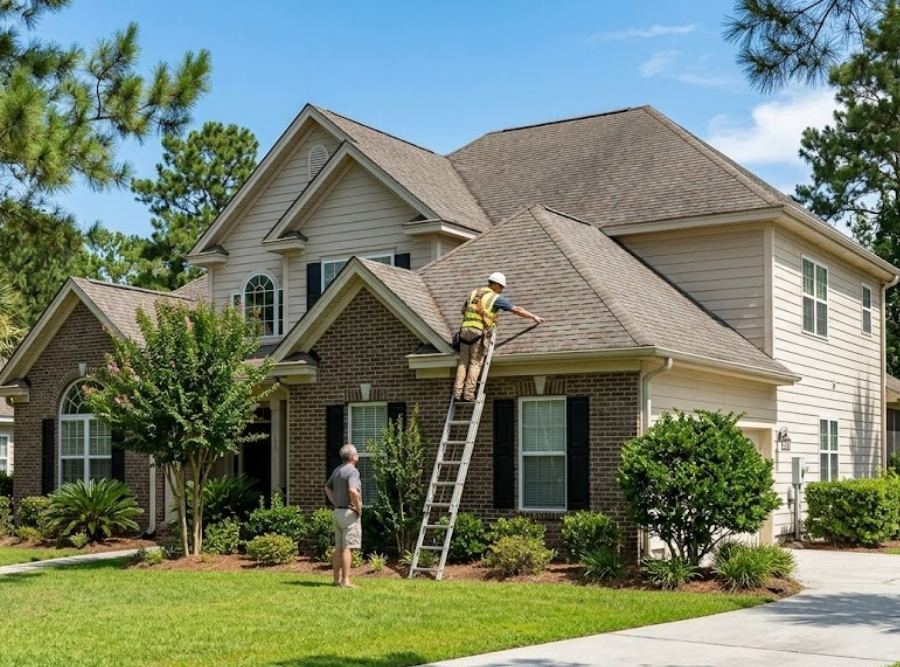
Ralph or Pierce personally gets on the roof before preparing an estimate because many of the most important indicators of roof health cannot be accurately assessed from the ground. During the inspection, we evaluate the condition of the shingles, flashing, pipe boots, ridge caps, roof penetrations, ventilation, valleys, decking condition where visible, and evidence of previous storm damage or repairs. We also look for subtle patterns that indicate whether deterioration is localized or affecting the roofing system more broadly. Our goal is not simply to determine whether the roof has reached a certain age but to understand how it is actually performing after years of exposure to the Lowcountry climate.
If repairs are appropriate, we explain exactly what we found and why those repairs make sense. If replacement is the better long-term investment, we provide an itemized written estimate before materials are ordered so homeowners understand the reasoning behind our recommendation. Throughout every roof replacement, we obtain the appropriate permits, document the installation with photographs, perform a magnetic sweep after tear-off, register the applicable manufacturer warranty, and conduct a final walkthrough with the homeowner before considering the project complete. That process reflects our commitment to doing the work thoroughly rather than simply replacing shingles as quickly as possible.
As a CertainTeed ShingleMaster-certified, owner-operated roofing contractor, Apex Roofing proudly serves homeowners throughout Hardeeville, Bluffton, Hilton Head Island, Beaufort, Okatie, Ridgeland, Port Royal, Lady’s Island, and surrounding South Carolina Lowcountry communities. We hold South Carolina License #57706 and Town of Bluffton License #0620033323, and we believe honest guidance is just as important as quality craftsmanship.
Understanding Your Roof’s Lifespan Helps You Plan, Not Panic
The average architectural asphalt shingle roof in coastal South Carolina often provides 20 to 30 years of service, but the actual lifespan depends on much more than age alone. Intense ultraviolet exposure, high humidity, salt-laden air, hurricane-season winds, ventilation quality, installation methods, and ongoing maintenance all influence how long a roof continues protecting the home. Some roofs remain dependable well beyond twenty years, while others begin showing meaningful signs of deterioration much sooner because of the demanding coastal environment.
The most important takeaway is that homeowners should not wait for a major leak before evaluating their roof. Small warning signs including granule loss, curling shingles, recurring repairs, or visible weathering often appear years before complete failure. Addressing those concerns early provides more options, reduces the likelihood of emergency replacement, and helps homeowners make thoughtful decisions instead of reacting during the middle of hurricane season.
Frequently Asked Questions About Asphalt Roof Lifespan in Coastal South Carolina
How long do asphalt shingles last in coastal South Carolina heat?
Architectural asphalt shingles in coastal South Carolina typically provide 20 to 30 years of service under normal conditions, but many roofs in areas like Hardeeville, Bluffton, and Hilton Head Island begin showing noticeable age-related wear between 15 and 20 years because of intense UV exposure, high humidity, and hurricane-season winds. Installation quality, attic ventilation, and maintenance history influence where a specific roof falls within that range more than age alone.
What are the first signs my asphalt roof is failing?
Granule loss is usually the earliest sign, showing up as increasing amounts of mineral granules collecting in gutters after rain, followed by curling, cracking, or increasingly brittle shingles as the asphalt loses flexibility. An increasing frequency of small repairs after routine wind events is another early warning sign that the roofing system as a whole may be approaching the end of its useful life rather than experiencing isolated damage.
Should I repair or replace an aging asphalt roof before hurricane season?
It depends on whether the roof’s problems are isolated or widespread. Repairs make sense when damage is limited to a few components, like a section of lifted shingles or damaged flashing, but once granule loss, brittleness, and recurring leaks appear together across the roof, replacement typically becomes the more economical long-term choice. Addressing this before hurricane season is generally less stressful than coordinating a replacement after storm damage has already occurred.
Does Hardeeville’s climate affect roofs differently than Hilton Head Island?
Hardeeville is farther from open water than Hilton Head Island, so roofs there experience somewhat less direct salt exposure, but the same intense UV, high humidity, and hurricane-season winds still accelerate asphalt shingle aging throughout the region. Exposed metal components like flashing and fasteners generally see less severe corrosion in Hardeeville than in beachfront Hilton Head Island locations, but the overall asphalt shingle lifespan range remains similar across both areas.
Wondering How Much Life Is Left in Your Roof?
If you’re seeing granule loss, curling shingles, or recurring repairs, Apex Roofing of the Lowcountry offers professional roof inspections throughout Hardeeville, Bluffton, Hilton Head Island, and the surrounding communities. Learn more about our roof inspection services, or explore our roof replacement process if it’s time to plan ahead of the next hurricane season.

Ralph Brehany is the owner and president of Apex Roofing of the Lowcountry, a licensed residential roofing contractor he founded alongside his son, Pierce, serving Bluffton, Hilton Head Island, Beaufort, and the surrounding Lowcountry. The company is CertainTeed ShingleMaster certified and holds SC License #57706, handling roof repair, replacement, and new installation across Beaufort and Jasper County. Ralph is known for staying hands-on throughout every project, from the initial estimate to daily progress updates on site.